Can Cardboard Boxes Really Cut Costs and Protect Better?
- Franziska Doppler
- Business
- 2026-03-27
- 1194K
Packaging is one of those things that quietly affects everything—costs, operations, and even customer perception. Cardboard boxes have stayed in use for a reason. They do the job without creating extra complications.
Most experienced cardboard box suppliers will say the same thing: the right box is not just a container; it’s part of the logistics strategy.
In day-to-day operations, especially in e-commerce and distribution, teams need packaging that is quick to assemble and easy to stack. Cardboard fits naturally into that flow. It doesn’t slow things down. It supports it.
Where Do Businesses Actually Save Money with Cardboard?
Savings don’t come from one big change. They come from small, practical improvements that add up over time.
- Boxes don’t take up space when stored flat
- Packing becomes faster with standard sizes
- Shipments stay lighter compared to rigid alternatives
- Damage rates drop when the right strength is used
A mid-sized retailer dealing in home accessories once reviewed its packaging process. Oversized cartons were being used for convenience. After switching to better-sized corrugated boxes, filler use dropped. Packing became quicker. The difference was visible within weeks, not months.
Is Cardboard Really Strong Enough for Modern Shipping?
This is where many people get it wrong. Strength is not about how thick something feels in the hand. It’s about how it behaves under pressure. Corrugated cardboard is designed to handle impact. The fluted layer inside acts like a buffer. It absorbs shock and spreads weight across the surface. That’s why it plays such an important role in protective packaging. Whether parcels are being moved across cities or stacked in a warehouse, the structure holds up.
In bulk storage areas, cartons are often stacked higher than expected. When the right board grade is used, they stay intact. This reduces handling issues and avoids unnecessary losses.
What Types of Cardboard Boxes Are Used Across Industries?
Different products come with different challenges. Packaging needs to adapt to that.
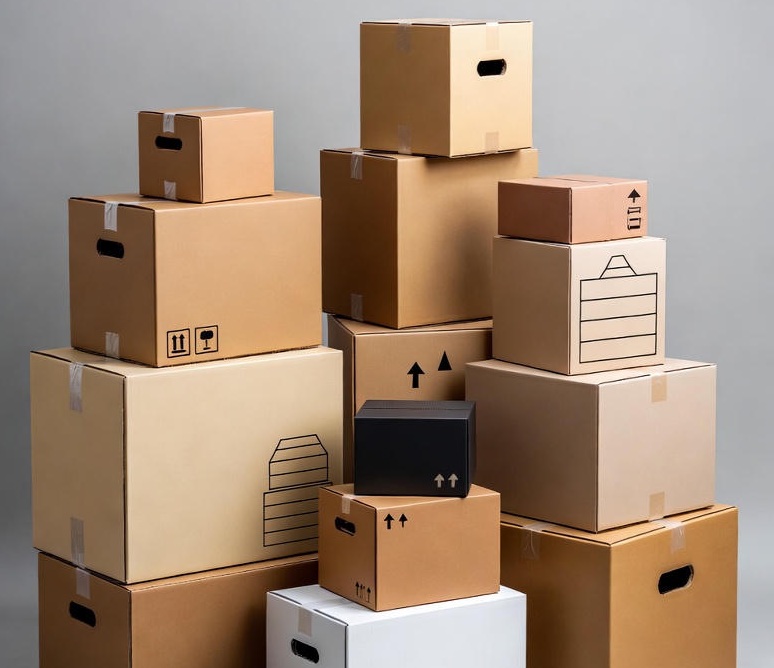
Regular Slotted Containers
These are the standard shipping cartons. Simple design. Easy to seal. Used almost everywhere.
Double Wall Boxes
Used when extra strength is needed. Suitable for heavier items or longer transit routes.
Die-Cut Boxes
Made for specific products. They fit better, which means less movement inside.
Telescopic Boxes
Useful for items without fixed dimensions. They adjust as needed.
Folding Cartons
Common in retail settings. Lightweight and presentable.
A supplier handling spare parts often uses telescopic boxes to manage different sizes without stocking too many variants. It keeps things simple on the warehouse floor.
What Other Materials Are Typically Used Alongside Boxes?
A box alone does most of the work, but it is rarely used alone. Supporting packaging Materials help fill gaps and prevent movement.
Cushioning options
- Paper fillers for basic void filling
- Air cushions when weight needs to stay low
- Foam inserts for delicate or high-value items
Wrapping materials
- Bubble wrap for fragile surfaces
- Kraft paper to avoid scratches
- Protective sheets for layered packing
Securing materials
- Tapes for sealing
- Straps for heavier loads
- Edge protectors to avoid corner damage
In real packing environments, less is often more. Overpacking increases cost without always improving safety. The goal is to use just enough material to keep the product stable.
Does Packaging Really Influence Customer Perception?
It does, even if customers don’t always say it directly. A damaged box immediately creates doubt about the product inside. On the other hand, a well-packed item conveys care. Using reliable protective packaging helps avoid unnecessary returns. It also reduces back-and-forth with customers, which saves time for support teams.
In premium retail, products are often packed in fitted boxes. Not because it looks good on its own, but because it keeps the item in place. Presentation and protection often go hand in hand.
How Important Is Sustainability in Packaging Choices Now?
It has become part of the decision-making process, not just for compliance but also for customer expectations. Cardboard works well here because it is widely recyclable and easy to dispose of.
Businesses that choose better packaging Materials are not just reducing waste. They are also simplifying their packaging process. Fewer mixed materials make recycling easier at the end of the chain. Large retailers have already moved in this direction. It’s not just about image anymore. It’s about practicality.
Are Custom Boxes Always Necessary?
Not always. But in some cases, they solve problems that standard boxes cannot. Many cardboard box suppliers recommend custom solutions for fragile or irregular items. A better fit reduces movement. Less movement means lower risk of damage.
In industries such as automotive and electronics, inserts are often placed inside boxes. This keeps components stable during transit. It also reduces the need for excessive fillers.
Conclusion
Cardboard boxes continue to do what they are meant to do—protect products and keep costs manageable. They are easy to work with, adaptable, and reliable in real conditions. When used correctly, they support both operations and customer expectations without adding unnecessary complexity.
1194 people like this



About Premium Author
This post has been authored and published by one of our premium contributors, who are experts in their fields. They bring high-quality, well-researched content that adds significant value to our platform.