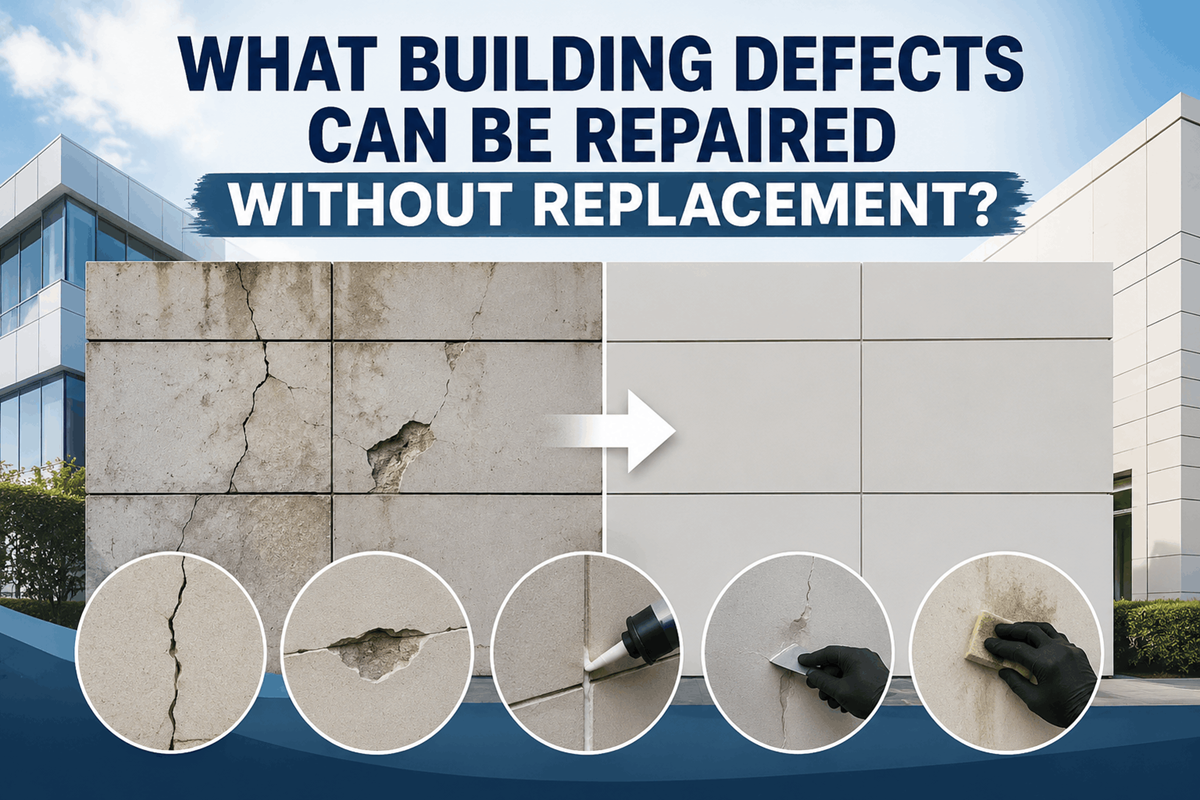
What Building Defects Can Be Repaired Without Replacement?
- Aleksandra Palmer
- Business
- 2026-06-06 11:49:43
- 1291K
A building defect is any damage, deterioration, or surface issue that affects the appearance or performance of a property. The good news is that many common defects do not automatically require replacement. Scratched glass, faded cladding, worn metal finishes, damaged façade sections, and cosmetic surface issues can often be repaired while keeping the original materials in place.
That distinction matters because replacement is rarely as straightforward as it sounds. A scratched glass panel might seem like a major problem until a specialist confirms that the damage is only on the surface. A faded section of cladding may look ready for removal, when the real solution is to restore the finish. In many cases, the smartest question is not "What needs replacing?" but "What can still be saved?"
Why Are More Building Owners Choosing Repair First?
A few years ago, replacement was often the default recommendation. Today, building owners are asking more questions before committing to large-scale works.
Part of that change comes down to cost. Another part comes from experience.
Real-World Maintenance Decisions
Facilities managers regularly discover that visible damage is not always structural damage.
Common examples include:
- Scratches on entrance glazing
- Scuffed aluminium frames
- Faded façade panels
- Marks caused during refurbishment projects
A property manager overseeing a city-centre office building may receive complaints about the appearance of the entrance long before there is any concern about the building's performance. First impressions influence how people view a property, even when the issue itself is relatively minor.
The Cost of Replacing Too Soon
Replacement often involves more than the damaged component itself.
Additional costs may include:
- Access equipment
- Labour
- Site disruption
- Material lead times
For occupied buildings, avoiding unnecessary replacement work can be just as valuable as the financial savings.
Can Scratched Glass Really Be Repaired?
This remains one of the most common questions in commercial property maintenance.
Many people assume that a scratched pane has reached the end of its life. In reality, the answer depends on the depth and nature of the damage.
Everyday Causes of Glass Damage
Glass is at greater risk than many people realise.
Frequent causes include:
- Construction debris
- Improper cleaning methods
- Moving equipment
- Maintenance works
It is not unusual for glazing to be scratched during a refurbishment project, particularly when multiple contractors are working in the same area.
Professional Glass Scratch Repairs are often considered when the damage affects appearance, but the glass remains structurally sound.
Where Repairs Are Commonly Used
Repair work is regularly carried out on:
- Shopfront glazing
- Office entrances
- Hotel reception areas
- Internal glass partitions
In many cases, restoring the existing surface is significantly less disruptive than replacing an entire pane.
What Happens When Cladding Starts to Look Tired?
Cladding rarely fails overnight. More often, it slowly loses its original appearance.
One elevation may remain vibrant while another becomes noticeably faded after years of exposure to sunlight and weather.
Surface Restoration Options
Building surveyors frequently encounter cladding systems that remain structurally sound but no longer look their best.
Common issues include:
- Colour fading
- Surface staining
- Minor impact damage
- Weather-related wear
Modern spraying and cladding solutions are often used to refresh these surfaces without removing the original installation.
Why Appearance Still Matters
For commercial buildings, appearance is not simply about aesthetics.
A well-maintained exterior can influence:
- Tenant perception
- Customer confidence
- Property value
- Brand image
A retail development with faded façades can create a very different impression from one that looks clean and well-cared-for.
Can Metal Finishes Be Restored Instead of Replaced?
Anyone responsible for building maintenance knows how quickly metal surfaces can begin to show signs of age.
Door frames, window systems, and architectural features are constantly exposed to weather, cleaning products, and daily use.
Common Metal Surface Issues
Problems often include:
- Surface scratches
- Dull finishes
- Fading
- Uneven colouring
These defects may affect appearance without affecting performance.
Professional anodised repairs are frequently used where building owners want to improve visual consistency while retaining existing architectural features.
Why Small Details Matter?
A building's condition is often judged by its details.
Examples include:
- Entrance frames
- Window surrounds
- Feature trims
- Decorative metalwork
Even minor defects can influence how visitors perceive the overall quality of a property.
Are Curtain Wall Systems Always Replaced When Damaged?
Not necessarily. In many commercial buildings, damage affects only a specific area rather than the entire system.
Localised Repair Solutions
Typical issues include:
- Surface defects
- Minor dents
- Cosmetic damage
- Isolated weathering
Professional curtain wall repair services are often used when the wider system remains fully functional.
How Professionals Assess the Damage?
Before recommending replacement, building professionals usually consider:
- Structural condition
- Extent of the damage
- Safety requirements
- Long-term maintenance plans
Many asset management teams now evaluate repair options first because extending the life of existing materials has become an important part of modern property management.
Conclusion
Not every defect is a replacement project waiting to happen. Scratched glass, faded cladding, worn metal finishes, and localised façade damage can often be restored successfully when the underlying material remains sound. For property owners, surveyors, contractors, and facilities teams, understanding the difference between repairable damage and genuine failure can save time, money, and disruption. More importantly, it allows buildings to retain their appearance and value without replacing materials that still have years of service left.
1291 people like this


About Premium Author
This post has been authored and published by one of our premium contributors, who are experts in their fields. They bring high-quality, well-researched content that adds significant value to our platform.