why-eggy-car
- Brandon Escobar
- Entertainment
- 2026-02-26 14:45:31
- 1139K
There’s something oddly dangerous about simple games.
You open them because you want a quick mental break. Nothing serious. Nothing competitive. Just a few relaxing minutes before bed.
That’s exactly what I thought when I first tried Eggy Car.
Two hours later, I was sitting upright in total silence, fully focused, whispering “steady… steady…” to a digital egg like it was a priceless artifact I had personally sworn to protect.
This is my honest experience playing it — the fun, the frustration, the near victories, and the strange emotional attachment I developed to a fragile oval sitting on top of a tiny car.
A Game That Looks Ridiculously Simple
The first thing that struck me about Eggy Car was how minimal it is.
There’s no complicated storyline.
No character customization.
No dramatic soundtrack building tension.
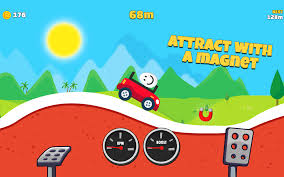
It’s just a small car driving across uneven hills with an egg balanced on top.
That’s it.
You control acceleration and braking. There’s no steering. No complex controls. The entire challenge revolves around physics and balance.
At first glance, it almost looks too simple to hold your attention.
That assumption lasted about 30 seconds.
The First Round: Overconfidence
The early terrain feels manageable. The hills are soft. The car responds smoothly. The egg wobbles a little, but nothing alarming.
I remember thinking, “This is easy. Why do people struggle with this?”
Then I hit the first serious downhill slope.
I pressed the gas slightly too hard.
The car sped up.
The egg lifted just a bit off the roof.
I panicked and tapped the brake too aggressively.
The car jerked forward.
The egg launched into the air.
Game over.
I actually laughed. It was so sudden and dramatic that it felt like slapstick comedy. One moment I was in control, the next moment the egg had completely abandoned ship.
That was my introduction to humility.
The Emotional Curve Is Surprisingly Intense
What makes this game so effective is how quickly it creates tension.
You’re not just driving. You’re protecting something fragile. That egg becomes your responsibility within minutes.
Every small wobble triggers a reaction.
Every steep hill feels like a test of patience.
Every personal best feels like a genuine accomplishment.
I didn’t expect to feel real frustration when the egg fell. But I did. Especially when I came close to beating my high score.
There was one run in particular I won’t forget.
I had been trying to surpass my best distance for nearly half an hour. Everything was going perfectly. I was controlling my speed carefully, barely braking, letting the car glide smoothly over hills.
Then I saw the number approaching my record.
Instead of staying calm, I rushed.
I accelerated too hard on a downward slope, thinking momentum would carry me cleanly over the next hill.
It didn’t.
The egg bounced once. Twice. Then it flew backward in slow motion.
Silence.
Failure.
I stared at the screen for a solid five seconds before restarting.
That moment summed up the experience perfectly: thrilling, infuriating, and impossible to walk away from.
Why It’s So Addictive
After spending more time with Eggy Car, I started to understand why it hooked me so quickly.
Instant Retry Keeps You Locked In
There’s no long loading screen. No complicated restart process. You tap once and you’re back in the game.
That instant reset removes friction. It becomes dangerously easy to say, “One more try,” over and over again.
It’s Skill-Based
Every mistake feels fair.
When I failed, I knew exactly why. I either accelerated too aggressively, braked too suddenly, or ignored the egg’s wobble warning.
There’s no random unfair obstacle. It’s just physics and your own decisions.
That fairness makes improvement feel achievable.
The Physics Create Comedy
The egg’s movement is genuinely funny at times.
Sometimes it gently rocks back and forth like it’s nervous about the hill ahead. Other times it launches into the air dramatically, almost as if it chose freedom over survival.
There were multiple moments where I failed and laughed instead of getting angry because the physics looked so absurdly exaggerated.
The Moment Everything Changed
At some point, something clicked.
I stopped reacting emotionally to every bounce. I began to anticipate the terrain instead of fighting it.
I realized that speed was not the goal.
Balance was.
The trick is to treat hills like waves. You don’t attack them. You ride them. Gentle acceleration going uphill. Light braking going downhill. Never sudden movements.
Once I adopted that mindset, my performance improved dramatically.
I doubled my original high score in a single session after that realization.
It felt strangely satisfying — not because the score itself mattered, but because I could feel my control improving.
My Most Frustrating Loss
The worst loss didn’t come from a difficult hill.
It came from distraction.
After surviving a particularly chaotic section of steep slopes, I was in complete focus mode. Then a notification appeared on my phone.
I glanced at it for less than a second.
That was enough.
The egg tilted forward. I reacted too late. The brake caused a sharp shift. The egg slid off.
Game over.
It’s amazing how such a small lapse in concentration can end everything in this game.
It made me realize how much attention I had unconsciously invested.
Small Strategies That Helped Me Improve
Through trial and error, I developed a few simple habits that made a big difference.
First, I stopped chasing speed. Faster runs almost always ended badly.
Second, I paid more attention to downhill slopes than uphill climbs. Downhill momentum is the real danger.
Third, I watched the egg instead of the car. The egg’s movement gives early warning signs. If it starts wobbling aggressively, you need to adjust immediately.
And most importantly, I stopped panicking. Overcorrection causes more failures than the terrain itself.
Calm inputs produce stable outcomes.
What I Learned From a Game About an Egg
It sounds dramatic, but there’s a subtle lesson here.
Patience outperforms aggression.
Every time I tried to rush for a better score, I failed. Every time I stayed controlled and consistent, I improved.
The simplicity of the design highlights this lesson beautifully. There’s nothing to hide behind. No flashy upgrades or shortcuts. Just pure timing and balance.
In a world full of overstimulating games packed with effects and noise, this minimal design feels refreshing.
It proves that strong mechanics matter more than complexity.
Is It Worth Playing?
If you enjoy casual games that are easy to start but difficult to master, it’s absolutely worth trying.
If you like chasing your own high score rather than competing against others, you’ll appreciate the challenge.
If you want something light but engaging enough to demand focus, this game delivers that balance surprisingly well.
Eggy Car may look small and silly, but it creates genuine tension and satisfaction in a way many bigger games fail to achieve.
Final Thoughts
I started playing out of curiosity. I kept playing because I wanted to improve.
I laughed at the dramatic egg launches.
I groaned at careless mistakes.
I celebrated personal bests like they actually mattered.
1139 people like this


About Premium Author
This post has been authored and published by one of our premium contributors, who are experts in their fields. They bring high-quality, well-researched content that adds significant value to our platform.