How C-Level Leaders Can Balance Speed, Security, and Stability in Software Delivery?
- admin
- Technology
- 2026-01-29 02:58:13
- 1117K
Enterprise software delivery has entered a new era where speed is no longer optional. Markets demand faster innovation, customers expect seamless digital experiences, and competitors release features at unprecedented velocity. Yet for C-level leaders, accelerating delivery without increasing risk remains a constant challenge. This is why software testing services have become a strategic lever for balancing speed, security, and stability in modern enterprise environments.
For CIOs, CTOs, and digital leaders, the question is no longer how fast can we deliver, but how fast can we deliver safely and sustainably.
The Executive Dilemma: Speed vs. Risk
Traditional software delivery models forced enterprises to choose between speed and stability. Faster releases often meant higher defect rates, security vulnerabilities, and operational failures.
Modern enterprises are shifting toward quality engineering and testing services that embed quality controls across the delivery lifecycle. This approach enables continuous validation without slowing innovation, allowing leadership teams to confidently push frequent releases while managing enterprise risk.
Why Traditional QA Models No Longer Work?
Legacy QA approaches operate as late-stage gatekeepers, validating software after development is complete. In fast-moving environments driven by Agile, DevOps, and cloud-native architectures, this model introduces delays and blind spots.
C-level leaders are replacing these models with continuous quality engineering practices that emphasize:
- Shift-left testing during design and development
- Automation-driven validation
- Real-time feedback loops
By integrating software testing services early, enterprises reduce rework, shorten release cycles, and prevent last-minute surprises.
Embedding Security Without Slowing Delivery
Security remains one of the biggest concerns for executive teams. As applications become more distributed, the attack surface expands across APIs, microservices, and cloud platforms.
This is why security testing services must be embedded directly into delivery pipelines rather than treated as standalone audits. Modern quality engineering integrates security validation into CI/CD workflows to detect vulnerabilities early and continuously.
With integrated security testing services, enterprises can:
- Identify risks before production deployment
- Protect sensitive data and intellectual property
- Maintain compliance without delaying releases
Security becomes an enabler of speed, not a blocker.
Stability Through Continuous Validation
Frequent releases increase the risk of regression failures and system instability. Enterprises operating always-on digital platforms cannot afford downtime or degraded performance.
Quality engineering and testing services focus on continuous validation across functional, performance, and resilience dimensions. This ensures that new features do not disrupt existing capabilities.
Key stability practices include:
- Automated regression testing
- Performance benchmarking under real-world loads
- Resilience and failover validation
These practices give leadership confidence that speed does not compromise reliability.
The Role of AI and Intelligent Automation
Automation alone is no longer enough. Enterprises are adopting AI-driven quality engineering to improve efficiency and decision-making.
AI-enabled testing helps organizations:
- Prioritize high-risk test scenarios
- Reduce redundant test execution
- Predict defect-prone areas
By augmenting software testing services with intelligence, enterprises maintain high quality standards while accelerating delivery velocity.
Data Snapshot: Speed, Security, and Stability Outcomes
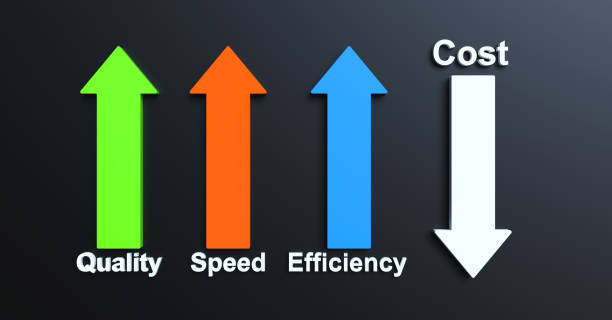
Enterprises that adopt integrated quality engineering models often report measurable benefits:
- 40% faster release cycles without increased defect rates
- 50% reduction in critical production incidents
- Improved security posture with fewer late-stage vulnerabilities
- Higher system uptime and customer satisfaction
These outcomes demonstrate how quality engineering supports both business agility and operational resilience.
Leadership Alignment: The Missing Ingredient
Balancing speed, security, and stability is not solely a technical challenge—it is a leadership responsibility. Without executive alignment, teams often prioritize speed at the expense of quality or over-engineer controls that slow delivery.
C-level leaders must:
- Set clear quality KPIs aligned with business outcomes
- Fund automation and security initiatives
- Break silos between development, QA, and operations
This leadership-driven approach ensures that quality engineering and testing services deliver consistent enterprise value.
Partnering for Scalable Quality Engineering
Many enterprises struggle to scale internal capabilities fast enough to meet delivery demands. Partnering with providers offering mature software testing services allows organizations to accelerate transformation without increasing operational complexity.
The right partner brings:
- Proven frameworks for continuous testing
- Deep expertise in security and performance
- Accelerators tailored for enterprise-scale delivery
Such partnerships help leadership teams balance innovation speed with enterprise-grade stability.
Conclusion: Executive Control Through Quality Engineering
For today’s digital enterprises, speed without control is a liability. By embedding quality engineering across delivery pipelines, C-level leaders gain the ability to innovate faster while reducing security exposure and operational risk. Investing in security testing services and continuous quality practices transforms software delivery into a predictable, resilient engine for growth.
FAQs
1. How can enterprises increase release speed without increasing risk?
By integrating quality engineering early and automating testing across the delivery lifecycle.
2. Why are security testing services critical for fast delivery?
They detect vulnerabilities early, preventing late-stage fixes and production incidents.
3. What role do C-level leaders play in software quality?
Leadership alignment ensures quality goals are prioritized alongside speed and innovation.
4. How does automation support stability in frequent releases?
Automated regression and performance testing catch issues before they reach production.
5. Can quality engineering and testing services reduce downtime?
Yes. Continuous validation improves system reliability and reduces production failures.
1117 people like this


About Admin
This post has been published by the admin of our website, responsible for content management, quality checks, and providing valuable information to our users.