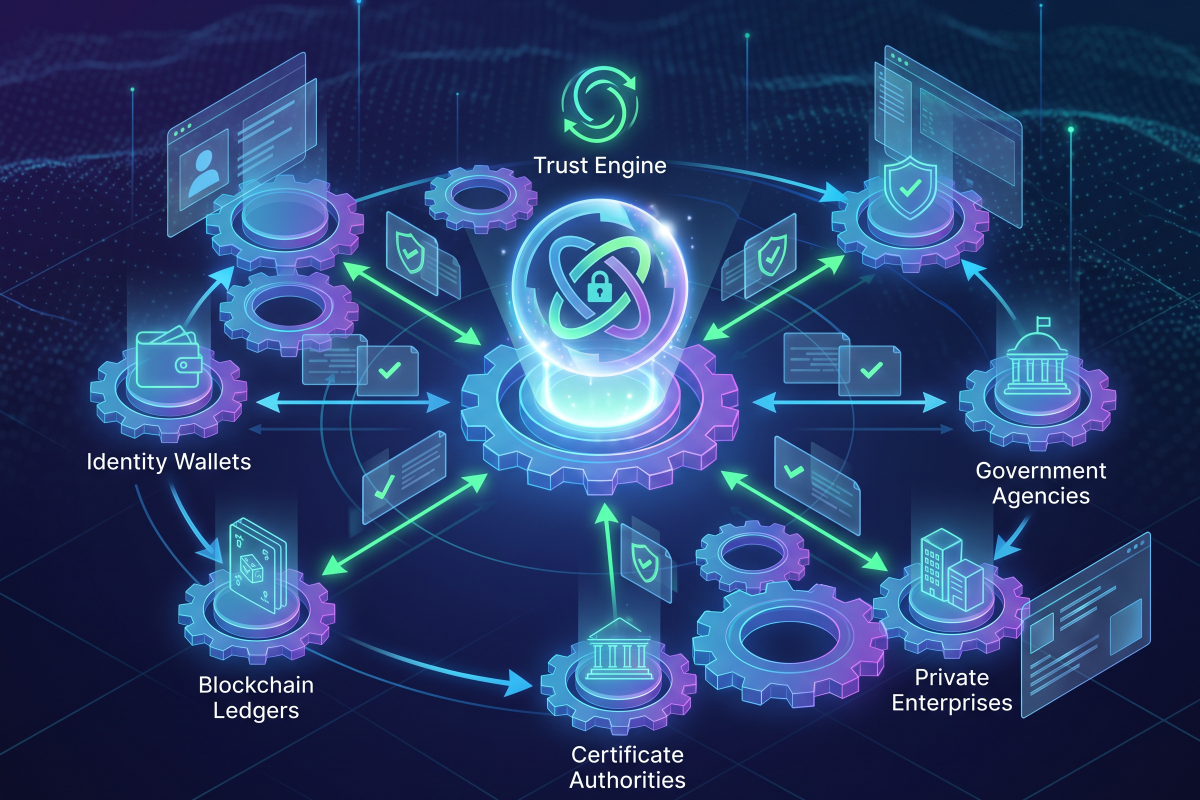
Digital Trust Engines Driving Verified Credential Ecosystems
- EveryCRED Solution
- Business
- 2026-05-01 12:13:07
- 1261K
Trust has become the backbone of every digital interaction.
Whether it is accessing a service, verifying identity, or sharing information online, users and organizations rely on systems that can confirm authenticity quickly and securely. But as digital ecosystems expand, maintaining that trust has become more complex.
This is where digital trust engines are emerging as a critical layer in modern infrastructure, powering verified credential ecosystems and redefining how digital identity works.
The Growing Need for Digital Trust
Today’s digital environment is built on constant data exchange.
From fintech platforms to digital government solutions, every interaction depends on accurate identity verification. However, traditional systems often rely on stored data and repeated checks, which can lead to inefficiencies and increased risk.
Challenges such as identity fraud, data breaches, and compliance pressure have made it clear that stronger digital trust services are no longer optional.
Organizations now need systems that can verify identity with confidence while minimizing data exposure.
What Are Digital Trust Engines
Digital trust engines are systems designed to enable secure and reliable identity verification across platforms.
They combine technologies such as:
- Digital identity platforms
- Credential management systems
- Identity proofing software
- Blockchain identity solutions
Together, these components create an environment where digital credentials can be issued, managed, and verified with accuracy and speed.
Instead of relying on assumptions, trust engines focus on proof.
Verified Credentials at the Core
At the heart of these systems are verifiable credentials.
These are secure digital proofs issued by trusted entities and used to confirm identity, qualifications, or access rights. Unlike traditional methods that require repeated document submission, verified credentials can be reused across systems.
For example, a user can present a digital certificate or digital ID card that has already been verified, eliminating the need for repeated checks.
This approach simplifies credentials verification while improving security and user experience.
The Role of Blockchain in Trust Systems
Blockchain plays a key role in strengthening digital trust engines.
With blockchain identity verification, credentials become tamper resistant and easily verifiable. Blockchain credentials provide a secure way to confirm authenticity without storing sensitive personal data in centralized systems.
This enables decentralized identity, where users have more control over their information and can share only what is necessary.
As a result, blockchain identity solutions help build trust at scale while reducing risks associated with data storage.
Building Verified Credential Ecosystems
A verified credential ecosystem is a network where credentials can be issued, shared, and verified across multiple platforms.
Digital trust engines support this ecosystem by enabling:
- Seamless credential management
- Real time identity verification
- Interoperability across systems
- Automated compliance processes
With the help of digital credential platforms and digital credential software, organizations can create scalable systems that support secure identity verification across industries.
Benefits for Modern Organizations
Adopting digital trust engines and credential platforms offers several advantages.
- Stronger security through tamper resistant blockchain credentials
- Faster identity verification using automated identity proofing software
- Improved compliance with digital identity compliance automation software
- Better user experience with reusable verified credentials
- Scalable digital identity management solutions across platforms
These benefits make it easier for organizations to manage identity while maintaining high levels of trust.
Real World Applications
Verified credential ecosystems are already transforming multiple sectors.
- Financial services use digital credentials for faster onboarding and fraud prevention.
- Digital government transformation initiatives rely on secure digital ID cards and credential verification systems.
- Healthcare platforms use identity proofing software for accurate patient identification.
- Education and workforce platforms issue digital certificates and digital badges for skill verification.
In each case, digital trust engines ensure that identity verification is reliable and efficient.
The Future of Digital Trust
As digital interactions continue to grow, the demand for trusted identity systems will only increase.
Future systems will rely more on:
- Decentralized identity models
- Verifiable credentials
- Blockchain identity verification
- Advanced credential management systems
Digital trust platforms will act as the foundation for secure interactions, enabling organizations to move from data heavy processes to proof based verification.
Final Thoughts
Digital trust is no longer just a feature. It is a requirement.
By combining digital identity platforms, blockchain identity solutions, and verified credentials, digital trust engines are creating a new standard for identity verification.
They enable organizations to reduce fraud, simplify compliance, and deliver better user experiences while building secure and scalable ecosystems.
In a world driven by digital interactions, trust is everything. And digital trust engines are making that trust possible.
Looking to build or scale your digital identity systems with verified credentials and blockchain identity solutions
We help organizations implement secure digital identity management solutions using digital credential platforms, identity proofing software, and digital trust services.
Connect with us to explore how verified credential ecosystems can transform your identity strategy.
1261 people like this



About Premium Author
This post has been authored and published by one of our premium contributors, who are experts in their fields. They bring high-quality, well-researched content that adds significant value to our platform.