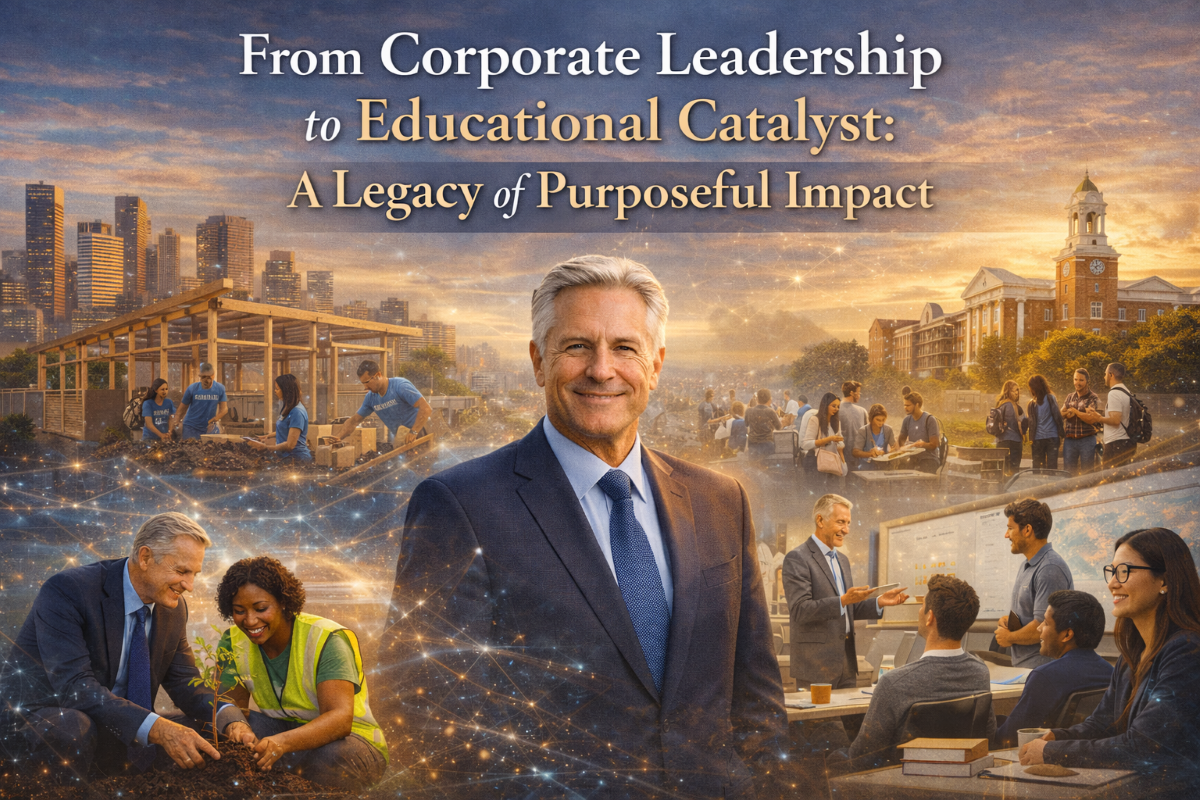
From Corporate Leadership to Purposeful Education Impact
In an era where business achievements and personal legacy increasingly intersect, the transition from corporate executive to community and academic partner reflects a growing trend among seasoned leaders who seek to extend their influence beyond traditional boardrooms. Rather than focusing solely on financial returns or organizational growth, many are choosing to dedicate their post-executive years to mentoring, institutional stewardship, and shaping the next generation of talent.
This shift reflects an understanding that true leadership does not end with a title, but lives on through the communities, institutions, and individuals that leaders nurture and inspire. The stories of senior executives who embrace this approach demonstrate how purpose-driven engagement can reshape educational environments and long-term organizational dynamics.
A New Chapter in Leadership Engagement
After decades of leading a major global company, stepping back from an executive post often prompts reflection on how best to continue contributing to society. Executives who have spent years guiding teams, fostering innovation, and navigating complex strategic landscapes are uniquely positioned to offer insight, mentorship, and support to institutions that shape future leaders.
One prominent example of this transition is underscored by Alex Molinaroli about his decision to invest his time and energy into educational ecosystems specifically through involvement with a university engineering college that has deep meaning in his family’s history. After retiring from corporate leadership, Molinaroli shifted his focus toward mentoring students and strengthening institutional structures that support long-term human development and societal contribution.
Prioritizing Institutional Impact
Rather than launching a personal foundation or emphasizing individual brand recognition, Molinaroli chose to work with established academic institutions that have stood the test of time. His reasoning reflects a belief that strong institutions bring sustained impact beyond the span of an individual’s career. By supporting organizational missions through direct engagement, leaders can enhance educational quality, expand opportunity, and amplify community impact.
This philosophy aligns with a broader shift in leadership thinking: an emphasis on long-term social value and community connectivity rather than short-term personal accolades.
Understanding Today’s Student Challenges
Engagement with students reveals how workforce and academic landscapes have evolved. Graduates today face a different set of uncertainties compared with earlier generations. Rapid technological change, shifting skills requirements, and evolving career paths all contribute to a sense of unpredictability that many recent graduates cite as a central concern.
Leaders who have transitioned from executive roles into educational advocacy note that adaptability, critical thinking, and the ability to learn continuously are essential skills for navigating this evolving terrain. Educational institutions that cultivate these competencies prepare students not just for current jobs, but for roles that may not yet exist.
Strengthening Institutional and Societal Bonds
When leaders support educational institutions without tying their contributions to personal branding, they reinforce the idea that universities and colleges play a timeless role in society serving as hubs of inquiry, creativity, and societal advancement. Through mentoring, engagement, and investment, leaders can help broaden access to opportunity and empower students to reach their potential.
This type of involvement also encourages graduates to pursue meaningful work that benefits both individuals and the broader community.
The Lasting Influence of Leadership Beyond Titles
Transitioning from executive corporate roles into civic and educational engagement provides a compelling example of how leadership can evolve while maintaining positive impact. By focusing on purpose, service, and long-term institutional development, leaders contribute to a cycle of generational progress.
For those exploring how leadership legacy can extend into education and community enrichment, Alex Molinaroli about his post-executive focus offers valuable insight into how purposeful contribution beyond titles and tenure can leave lasting influence on individuals and institutions alike.
1123 people like this


About Premium Author
This post has been authored and published by one of our premium contributors, who are experts in their fields. They bring high-quality, well-researched content that adds significant value to our platform.