How to Use Protective Packaging to Pack Artefacts Damage-Free?
- Emily Jones
- Business
- 2026-03-26
- 1189K
Packing artefacts is never just another task; it carries responsibility. Some are fragile, some are irreplaceable. Some shipments arrive damaged due to small mistakes. Most of those issues could be avoided.
In real logistics work, artefact packing is treated differently. Extra time is given, and materials are chosen carefully—every layer, every wrap, and every seal matters. If you pack with the right approach, things stay safe. If you rush, the risks increase immediately. Let’s walk through what actually works in real situations.
What Should You Prepare Before Packing Artefacts?
Start by understanding the item properly. Look at its shape, weight, and surface. Some artefacts have delicate edges, while others may have uneven structures. Clean the item gently before packing. Dust particles can scratch surfaces as they move. Choose a sturdy outer box early. Do not leave that decision for later.
Using proper protective packaging from the beginning helps. It sets the base for safe handling. Keep all your supplies within reach, as you do not want to pause midway.
Which Materials Help Keep Artefacts Safe?
Paper Wrapping and Fillers
- Soft and easy to handle
- Helps prevent surface scratches
- Useful for filling empty spaces
- Works well for light cushioning
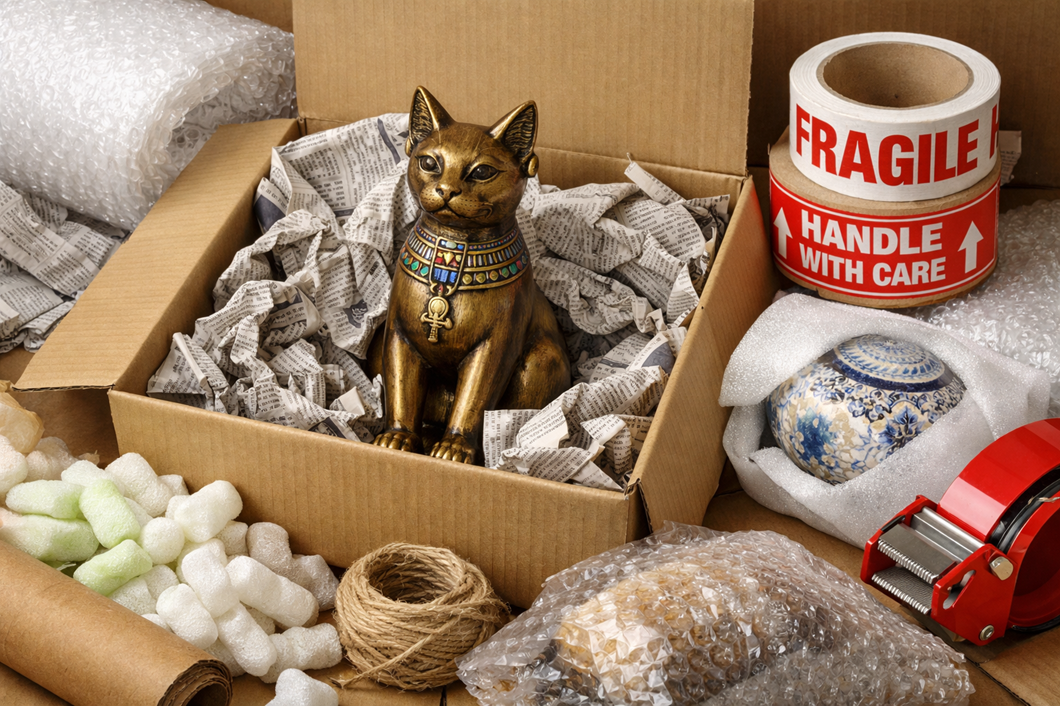
Many people still use newspaper offcuts while packing to fill gaps inside boxes. In storage facilities, fillers are always used. They reduce movement during transport.
Bubble Wrap
- Absorbs shocks during handling
- Wraps easily around different shapes
- Adds a strong protective layer
- Prevents cracks and chips
Bubble wrap is almost always used for fragile items. It creates a soft barrier around the object. In shipping fragile goods, multiple layers are common. It gives added protection during loading and transit.
Foam Sheets and Padding
- Protects edges and corners
- Reduces vibration impact
- Lightweight and flexible
- Suitable for detailed surfaces
Foam is often used for sculptures and carvings. It protects fine details from damage. In furniture logistics, foam is widely used. It prevents scratches on polished surfaces.
Strong Outer Boxes
- Holds the entire structure together
- Supports stacking during transport
- Protects from external pressure
- Available in different strengths
A strong box is essential to carry the weight of everything inside. In warehouses, double-layered boxes are preferred. They offer better strength for delicate shipments.
Sealing and Securing Materials
- Keeps boxes tightly closed
- Prevents accidental opening
- Maintains packing stability
- Supports long-distance transit
Sealing is often underestimated. But it can decide the outcome. Using printed tapes also helps with identification. It reduces confusion during handling. In logistics operations, secure sealing is standard practice. It avoids unnecessary risks.
Custom-Fit Protection
- Designed for specific shapes
- Reduces movement inside the box
- Adds an extra safety layer
- Ideal for high-value items
Some artefacts need special attention. Standard packing may not be enough. This is where tailored packaging materials are useful for fitting the item and holding it in place.
Museums and collectors often use such solutions. It ensures items remain stable throughout transit.
How Do You Pack Artefacts Step by Step?
- Start with a base layer of paper. Wrap the item gently and completely.
- Add bubble wrap over the first layer.
- Use foam on corners and edges. These areas have the most impact.
- Place the item carefully inside the box. Never drop it into position.
- Fill all empty spaces tightly. Movement is the biggest risk factor.
- Seal the box properly. Check every edge before closing.
- In professional packing setups, double boxing is common.
- An inner box is placed inside a larger one.
Why Is Layering So Important?
Layering builds protection step by step. Each material handles a different risk. Together, they create a strong shield. Without layers, pressure reaches the item directly. That increases the chance of damage. In art transport, layering is always followed. It is a basic rule, not an option. Using proper protective packaging ensures better safety. It reduces stress during transit.
What Mistakes Should You Avoid?
- Do not rush the process. Packing needs patience.
- Avoid weak or damaged boxes. They fail under pressure.
- Do not leave empty gaps inside. Items may shift and collide.
- Avoid relying on a single material. Balanced packing works better.
- Skipping proper sealing is risky. It can lead to losses.
How Do Industry Practices Help?
Real-world experience teaches what works best. Art handlers follow strict packing routines.
Each item is treated with care. Shipping teams use tested methods. They rely on layering and strong materials. Collectors often double-pack valuable pieces. It adds an extra level of safety. The right mix of packaging materials improves results. It reduces damage during handling. These practices are proven over time. They are practical and reliable.
How Can You Make Sure Delivery Stays Safe?
Consistency makes a big difference. Follow the same careful process every time. Do not skip important steps.
- Use good-quality materials always. Compromising here increases risk.
- Check the packed box before sending. A quick review can prevent mistakes.
- Using printed tapes helps track handling. It adds clarity during movement.
- Safe delivery is not luck. It comes from proper preparation.
Conclusion: How Can You Pack Artefacts Without Damage?
Packing artefacts is about more than protection. It is about respect for the item itself. Every step you take adds a layer of safety. From wrapping to sealing, everything matters. Rushing the process often leads to regret. Taking a little extra time makes a difference. Think of packing as a system, not a task. Each material plays its own role. Using the right protective packaging approach helps a great deal. It keeps items safe through every stage of transit.
Also, learning from industry practices adds confidence. These methods are tested in real conditions. When done correctly, packing becomes reliable. Your artefacts reach safely, just as they should.
1189 people like this



About Premium Author
This post has been authored and published by one of our premium contributors, who are experts in their fields. They bring high-quality, well-researched content that adds significant value to our platform.