What Is the Secret to Damage-Free Cosmetic Deliveries?
- Packaging Midlands
- Business
- 2026-06-03 16:03:18
- 1284K
A cracked perfume bottle rarely happens because a delivery driver dropped a parcel. More often, the problem starts much earlier.
In many cases, the product was packed into a box that was too large, wrapped too loosely, or left with enough space to move around for hours while travelling through sorting centres and delivery vans. By the time the parcel reaches the customer, the damage has already been done.
This is a common challenge across the beauty industry. Cosmetics are often packaged to look attractive on a shelf, not to survive a long journey. A luxury fragrance bottle, a pressed powder compact, and a skincare jar may all sit comfortably in a display cabinet. Still, they react very differently when exposed to vibration, pressure, and repeated handling.
The brands that consistently achieve low damage rates are not necessarily spending more on packaging. In most cases, they are simply using the right materials in the right places.
Why Do Cosmetic Deliveries Get Damaged So Often?
Anyone who has worked in fulfilment knows that a parcel goes through far more handling points than customers realise.
A package may be loaded onto cages, moved through conveyor systems, stacked with other shipments, transferred between vehicles, and sorted multiple times before it reaches its destination. Every touchpoint creates another opportunity for movement inside the box.
The real enemy is often not a major impact but constant vibration. A powder compact can develop cracks. A perfume bottle can repeatedly knock against a carton wall. A skincare jar can loosen slightly with every movement.
That is why protective packaging is designed to control movement first and absorb impact second.
Which Packaging Materials Actually Make a Difference?
There is a tendency to focus on one packaging material and expect it to solve every problem. In reality, successful cosmetic packaging relies on several layers working together.
Corrugated Cartons
The outer box carries more responsibility than many businesses realise. It must withstand stacking pressure, protect products from external knocks, and keep its shape throughout the delivery process.
Many beauty retailers source cardboard boxes from Birmingham suppliers because they can choose board grades that match the weight and fragility of different cosmetic products.
What matters most is fit. A perfectly sized carton often protects products better than a larger box filled with excessive packaging materials.
Bubble Protection
Few materials have remained as popular in cosmetic fulfilment as bubble wrap, and for good reason.
A large roll of bubble wrap allows packers to create a cushioning layer around fragile items without adding significant weight to the shipment. It is particularly useful for perfume bottles, glass serum containers, and premium gift sets where even minor damage can affect the customer experience.
In busy fulfilment environments, individual wrapping also prevents products from knocking into one another during transit.
Void Fill Materials
One lesson warehouse teams learn quickly is that products should never be allowed to travel freely inside a carton.
Paper fillers, air cushions, and protective packing paper help keep items in position. Their role is not simply to fill space. They create stability.
When a parcel is opened, and everything is exactly where it was packed, the void-fill material has done its job.
Sealing Materials
Even the strongest carton becomes vulnerable if the seal fails.
This is why many operations prefer working with established Vibac tape suppliers rather than choosing tape purely on price. Consistent adhesion becomes particularly important when cartons are exposed to changing temperatures or multiple handling stages.
How Should Different Cosmetic Products Be Packed?
Not all cosmetics respond to transit conditions in the same way.
Fragrances
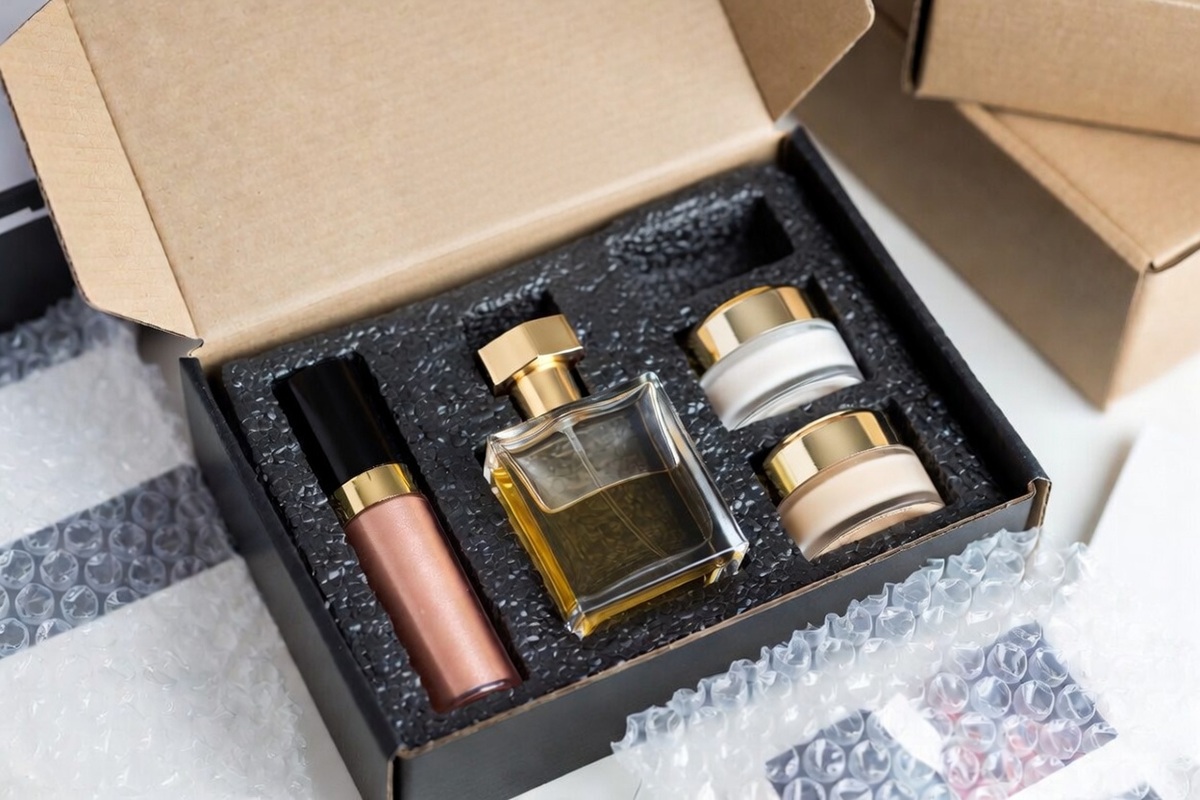
Glass fragrance bottles require the highest level of protection. Most fulfilment specialists recommend individual wrapping, additional cushioning around the base, and enough space between the bottle and the outer carton to absorb shocks.
Skincare Collections
Luxury skincare ranges often include multiple jars and bottles in a single order. Dividers and cushioning materials help prevent products from colliding during transit while maintaining presentation quality.
Makeup Products
Pressed powders and palettes are vulnerable to repeated vibration. Fitted inserts are commonly used because they hold products firmly in place and reduce internal movement throughout the journey.
Smaller Beauty Items
Lipsticks, mascaras, and eyeliners may not appear fragile, but loose items can still create problems. Grouping them inside smaller internal packs often produces a cleaner and more secure shipment.
Conclusion
No single product is responsible for damage-free cosmetic deliveries. Success usually comes from a combination of sensible carton selection, proper cushioning, secure sealing, and careful packing techniques. When each layer of protection works together, cosmetics arrive in the same condition they left the warehouse, which is exactly what every customer expects.
1284 people like this



About Premium Author
This post has been authored and published by one of our premium contributors, who are experts in their fields. They bring high-quality, well-researched content that adds significant value to our platform.